GTA 6 arrived as the most anticipated game in history, and the explanation lies in the brains of the people who waited for it. The hype was not born from an advertising campaign: it was built over more than two decades of games of extreme quality, which taught millions of people to associate the Rockstar name with a guaranteed reward.
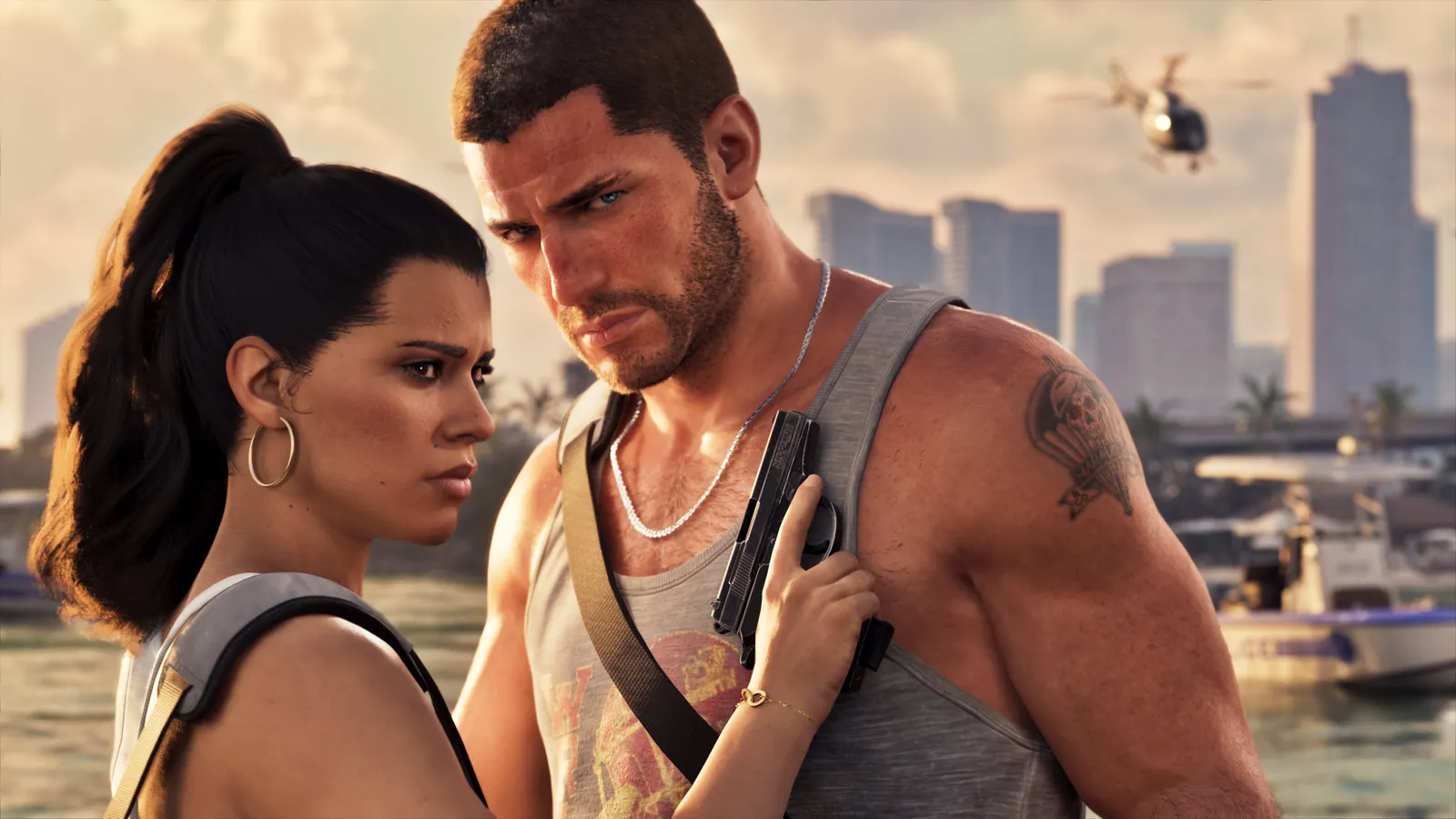
The expectation was confirmed before the game even reached stores. On November 18, 2026, when the review embargo lifted, one day before launch, GTA 6 earned a Metascore of 99 from 109 reviews. It is the highest score ever recorded on Metacritic, tied with The Legend of Zelda: Ocarina of Time, and it beats GTA IV (98) and GTA V (97).
The effect left the screen and reached the workplace:
- 18% of salaried workers planned to take November 19 off to play; among Gen Z, 32%, and among millennials, 27%, according to BambooHR data.
- Logitech gave its 7,000 employees worldwide a day off to play. CEO Hanneke Faber said she would take November 19 herself: "It's time to retire the stereotype that gaming is a waste of time."
- Burger Motorsports simply closed on launch day because much of its team asked for the day off. When even the bosses want to play, the day off becomes company policy.
In this article, we'll look at how Rockstar built this desire, what happened in the audience's brain at each stage and, above all, how you can apply the same principles to your business.
How Rockstar taught the brain to want GTA 6
The GTA 6 hype is the result of learning: over 25 years, each Rockstar game delivered a bigger reward than the last, and the audience's brain learned to expect it. The franchise's history can be read in six stages, each triggering a different mechanism.
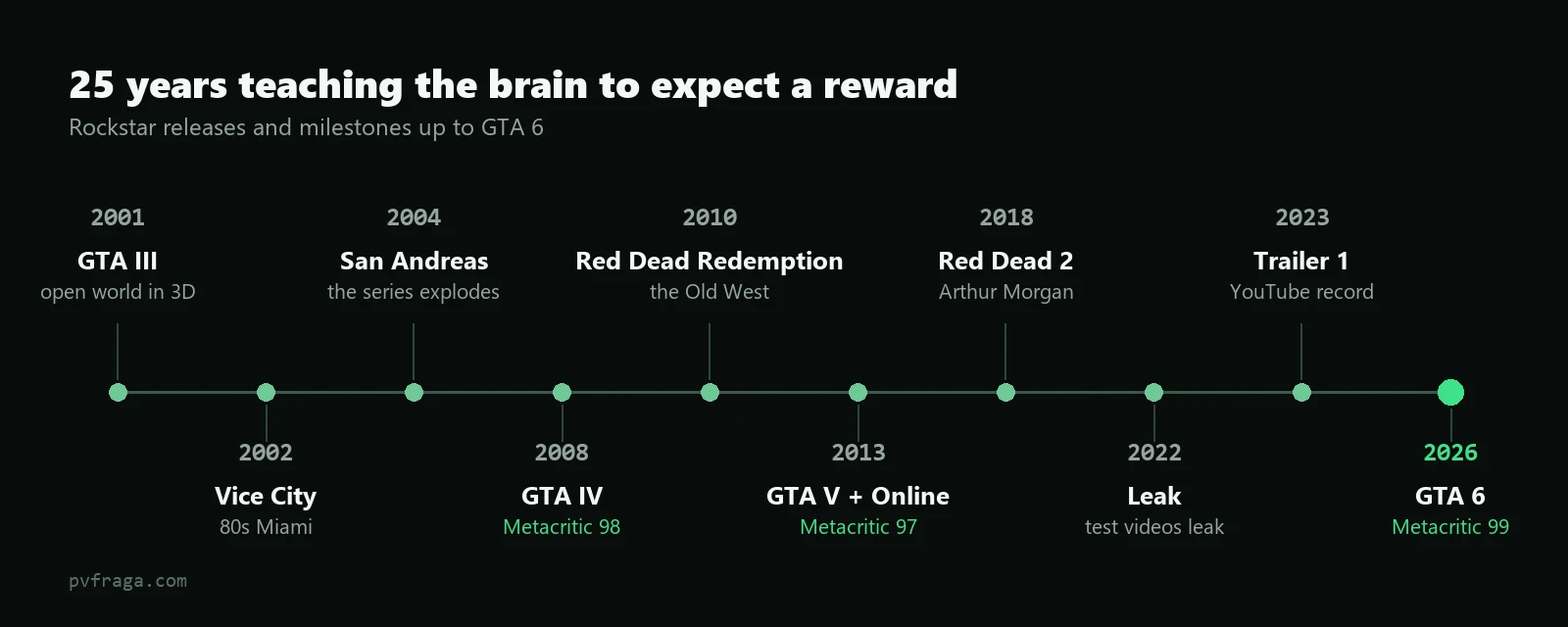
1. The 2000s: GTA III, Vice City and San Andreas create emotional memory
GTA III (2001) took the series into a 3D open world. Vice City (2002) recreated 1980s Miami, and San Andreas (2004) expanded everything. For a whole generation, these games became part of growing up.

In the brain: nostalgia mixes positive and negative emotion (Open Neuroscience Initiative, p. 332) and ties autobiographical memory, stored with the help of the hippocampus, to the emotional charge processed by the amygdala. When GTA 6 announced the return to Vice City, it did not just sell a setting: it sold the memory of who the player was at 15.
2. GTA IV and GTA V: the brand becomes a reward cue
GTA IV (2008) and, above all, GTA V (2013) raised the quality bar for games and became sales phenomena.
In the brain: dopamine neurons do not simply encode pleasure; they signal the reward prediction error, the difference between what was expected and what was received (The Cognitive Neurosciences, p. 1106). Over time, dopamine stops firing at the reward and starts firing at the cue that announces it (Cognitive Neuroscience: The Biology of the Mind, p. 555).
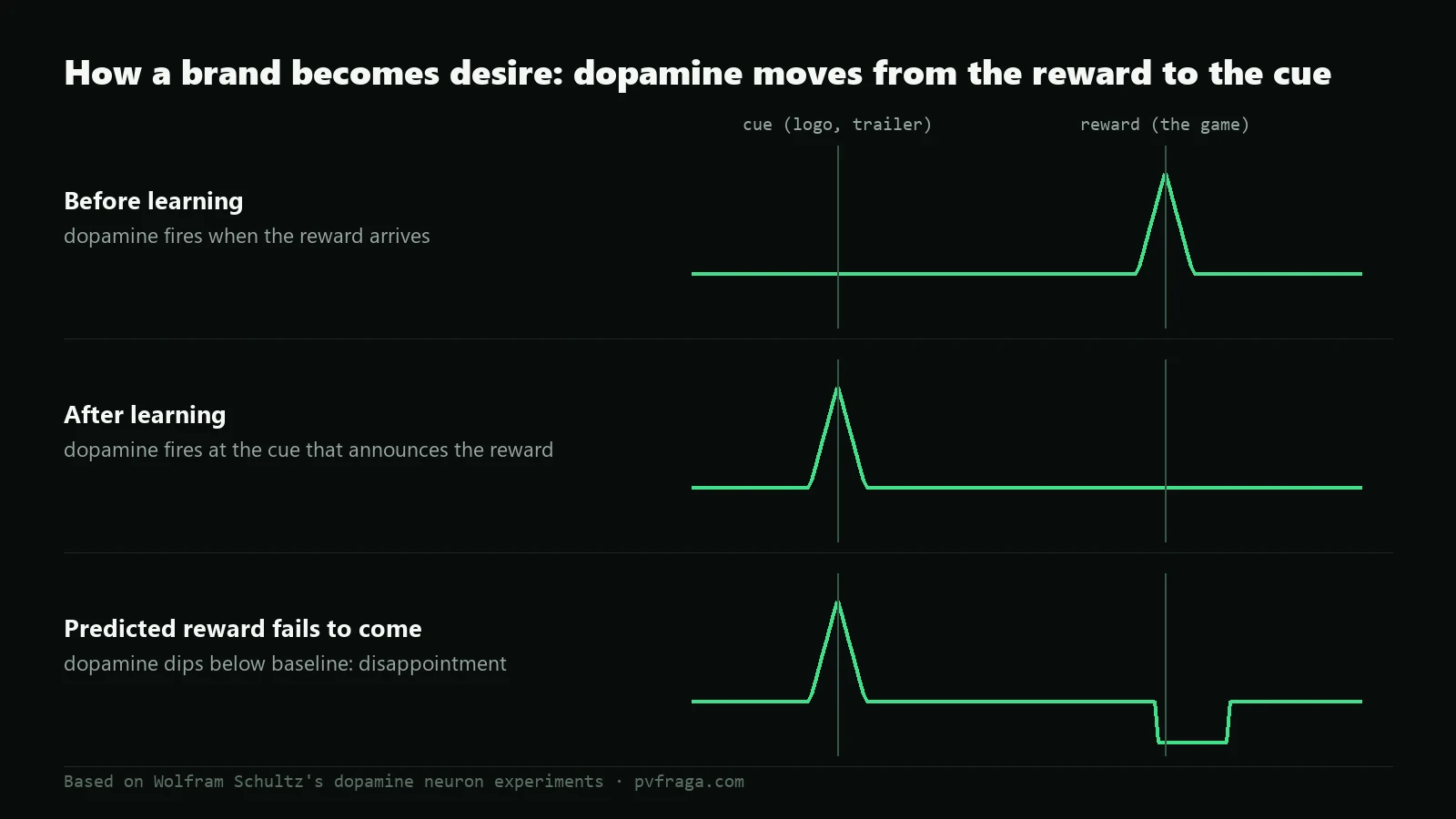
That is what happened with Rockstar: after so many memorable experiences, the logo itself became the cue. Just reading "Grand Theft Auto VI" makes the reward system react, before seeing a single image of the game.
3. GTA Online and Red Dead Redemption 2: the audience never left
GTA Online kept millions of people playing for over a decade. In 2018, Red Dead Redemption 2 confirmed that quality kept rising, with characters like Arthur Morgan, an outlaw with a conscience.
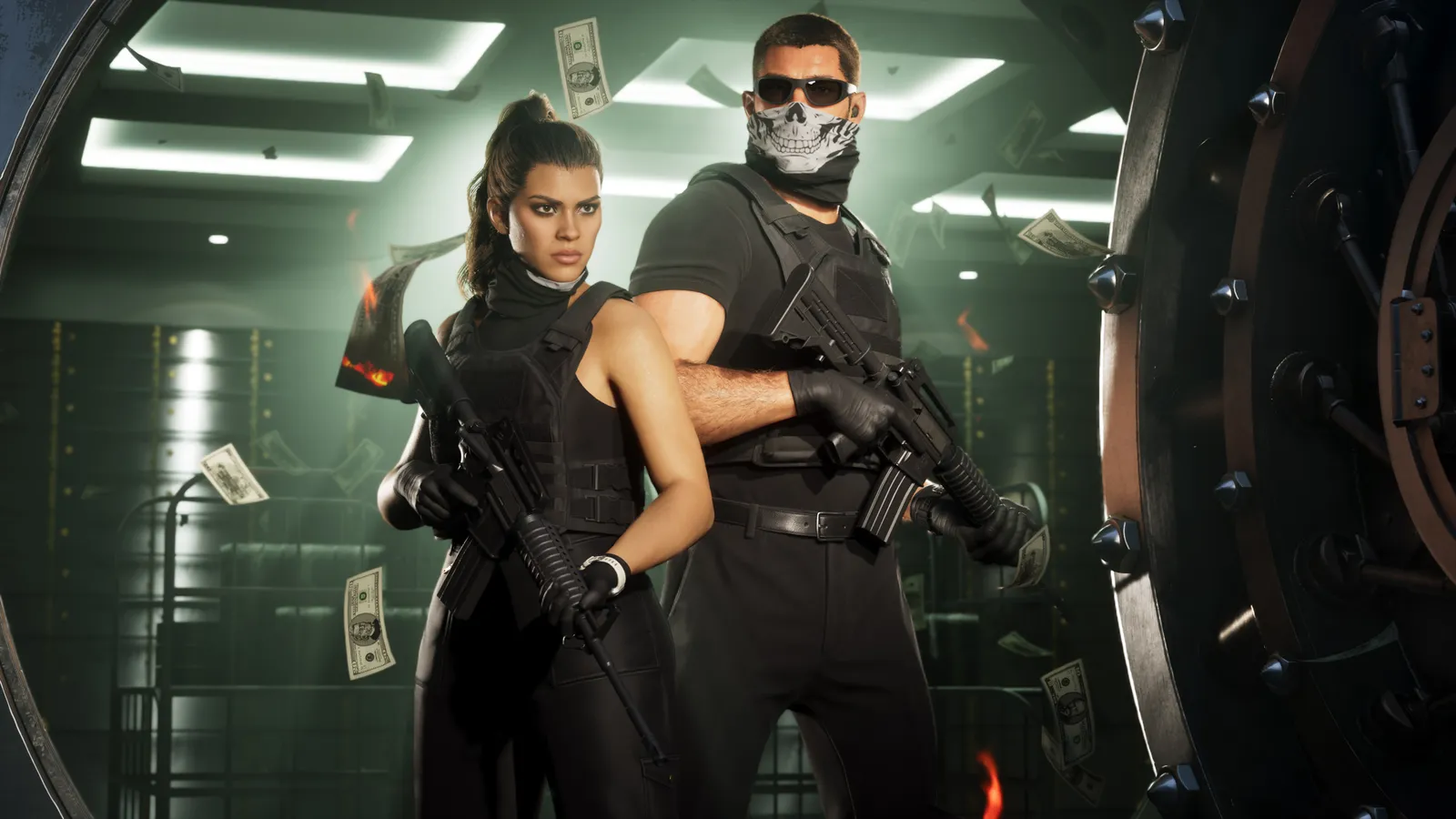
In the brain: Rockstar's core fantasy is safe transgression. The amygdala and the alert system react to the adrenaline of an escape or a heist, while the prefrontal cortex knows it is all fiction. It is the same principle as enjoying a horror movie: strong emotion in a safe setting. Add the freedom of the open world, constant novelty and empathy for anti-heroes, which make players live moral dilemmas from the inside.
4. Strategic silence: uncertainty and curiosity
For years, Rockstar barely talked about the next GTA. With no official information, fans started digging for clues, building collective maps and creating theories.
In the brain: dopamine responds more strongly when the reward is uncertain (Fiorillo, Tobler and Schultz, 2003). The lack of information opens a curiosity gap, and every new clue becomes a small reward. In practice, the audience started working for free for the game's marketing.
5. Leak, trailers and delays: the desire only grows
In 2022, a hacker leaked dozens of test videos of the game. In December 2023, the first trailer broke YouTube viewing records, and the second came in May 2025. The launch was delayed twice, from 2025 to May 2026 and then to November 19, 2026.
In the brain: when something beats expectations, dopamine fires and reinforces the lesson that it is worth it (Cognitive Neuroscience: The Biology of the Mind, p. 555). Each trailer delivered more than the audience imagined and raised the bar. The delays frustrated people, but reinforced the message that Rockstar was polishing the game, and the more time you invest in waiting, the more value the object gains.
6. Thirteen years of "wanting" and social contagion
Thirteen years passed between GTA V and GTA 6. During that time, the game became the subject of memes, videos and office conversations.
In the brain: neuroscientist Kent Berridge proposes that dopamine is tied to wanting, not to liking (Cognitive Neuroscience: The Biology of the Mind, p. 559). The hype is literally accumulated wanting, with the nucleus accumbens activated by anticipation. On top of that, social rewards trigger the same reward circuit as food and other natural rewards (Foundations of Neuroscience, p. 391). Talking about the game brings belonging, and being left out creates the fear of missing out (FOMO). That is why so many people asked for the day off: the launch became a collective ritual.
If you want to see these circuits at work, explore NeuroAtlas, the interactive 3D brain I built: you can turn on the dopamine pathway and watch the VTA, the nucleus accumbens and the prefrontal cortex in action. And to go further, in I tested the AI brain that predicts video virality I show how a Meta model predicts the cortex's response to a video.
How to apply these strategies to your business
You don't need 13 years or a billion-dollar budget: the mechanisms behind the GTA 6 hype work in any customer's brain. The order matters: first you build trust with quality, then you use anticipation and scarcity.
1. Exceed expectations at every touchpoint
The brain learns from prediction error: what beats expectations is remembered and wanted again. Map every touchpoint (service, packaging, after-sales) and add a detail the customer did not expect.
Example: an online store that adds a handwritten note and an extra sample to the order creates a positive surprise no ad can buy.
2. Turn your brand into a reward cue
Dopamine moves from the reward to the cue that announces it. For that to happen with your brand, the experience has to be consistent: customers only learn to associate your name with something good if the reward always comes.
Example: a pizzeria that keeps the same taste, delivery time and presentation on every order makes its logo in the app turn into a craving.
3. Create controlled mystery before you launch
Uncertainty amplifies dopamine, and an information gap sparks curiosity. Before a launch, reveal little by little: a detail, a date, a partial image.
Example: a clothing brand that shows only the fabric and color of the new collection for two weeks, with a countdown to the full reveal.
4. Make the launch an event
Rockstar announced trailers with a set date and time. An event with a schedule turns news into a collective ritual and creates fear of missing out.
Example: a coffee shop that launches its winter menu on a specific evening, only for people on the list, with a tasting.
5. Connect with your audience's emotional memory
Nostalgia ties memory to emotion. Find out what marked your customers' lives (an era, a flavor, a song) and bring it into your communication.
Example: a bakery that recreates "grandma's cake" with the recipe and packaging of the 90s.
6. Sell the fantasy, not just the product
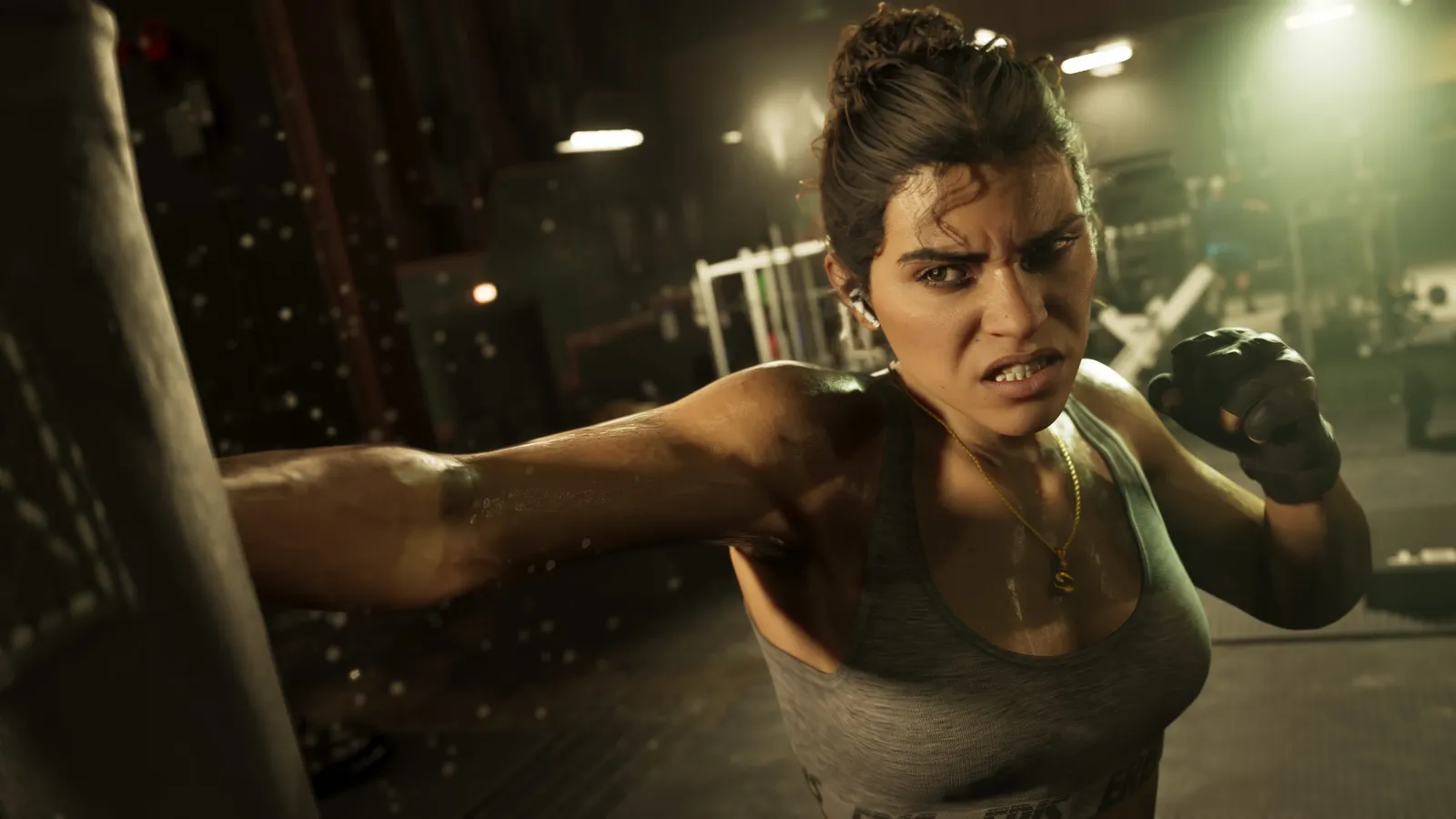
Rockstar sells the experience of living as an outlaw, something real life forbids. Every strong brand sells a fantasy: freedom, status, safety, belonging. Ask yourself what life your customer would like to live and show how your product gets them closer to it.
Example: a gym that doesn't sell "weight training" but the stronger, more confident version of the member.
7. Build a community that works for you
GTA fans created theories, maps and memes for free. Social rewards activate the same reward circuit as food. Give customers reasons to talk to each other: groups, challenges, content to share.
Example: a plant shop with a group where customers show how their plants have grown and swap tips.
The most important warning: without quality, mystery becomes oblivion
Rockstar's silence only works because the audience trusts the reward will come. A brand with no track record that plays the mystery card is simply ignored. And hype has a price: if delivery falls short of the expectation you built, the prediction error turns negative and the disappointment is proportional to the size of the promise. Promise a little less than you deliver, never the opposite.
To dig deeper into how the brain decides on a purchase, also read Why they don't buy: neuromarketing and the science of decision.
Conclusion: hype starts long before the announcement
GTA 6 did not become so anticipated because of a trailer or a campaign: it did because, for more than two decades, Rockstar taught the audience's brain that its name means reward. Quality created trust; mystery, nostalgia and the event turned that trust into desire. The 99 score and the empty offices on launch day are only the visible part of that process.
The lesson applies to any business: building a brand means teaching the customer's brain to associate your name with a reward. Once that happens, the name alone triggers the urge to buy.
If you enjoyed understanding what happens in the brain behind consumer decisions, follow the blog: you'll find new articles on neuromarketing, behavior and neuroscience applied to business. And follow me on social media, where I share analyses like this one every day: Instagram @pvfraga_growth90, LinkedIn and Facebook. Tell me in the comments: are you already playing GTA 6?
Sources
- Dexerto — GTA 6 is the joint best-reviewed game of all time
- Fortune — Ahead of GTA VI's release, Logitech is giving 7,000 employees the day off to play video games
- Yahoo Finance — Nearly 20% of workers plan to take Nov. 19 off for Grand Theft Auto 6
- Rockstar Games — official Grand Theft Auto VI images
- Fiorillo, Tobler and Schultz (2003) — Discrete coding of reward probability and uncertainty by dopamine neurons, Science
- Gazzaniga, Ivry and Mangun — Cognitive Neuroscience: The Biology of the Mind, p. 555 and 559.
- Gazzaniga (ed.) — The Cognitive Neurosciences, p. 1106.
- Henley — Foundations of Neuroscience, p. 391.
- Open Neuroscience Initiative, p. 332.

Written by
Paulo Victor Fraga
Comments(0)
Be the first to comment.